
BROOKINGS — The Brookings Regional Humane Society is looking to the county to become a major stakeholder in its future, with the group asking the Brookings County Commission for $500,000, a move that would provide a significant boost to the ongoing fundraising efforts for a new facility.
“We feel that our work is very important for public safety and animal welfare in Brookings County and the surrounding area,” Tammy Knudtson told the commission at its April 21 meeting. “Our number of intakes, programs and operating costs have gone up every year since we started.”
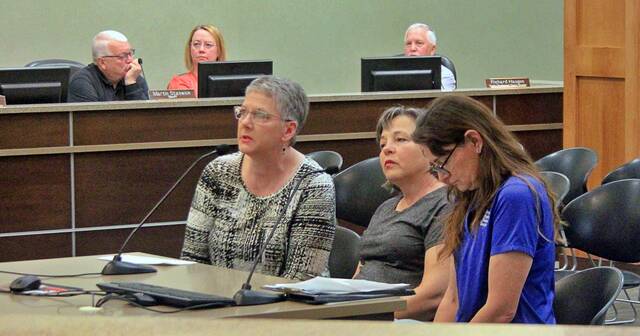
Knudtson, along with Angela Daly, serve as co-directors of the society’s capital campaign. They were joined by BRHS Executive Director Maia Moore.
“Our new facility will allow us to serve more animals, provide best-practice care, expand services to our growing communities and respond to the growing needs of Brookings County and the surrounding region,” Moore said.
The campaign by BRHS aims to raise between $7 million and $10 million through 2030. Even at this early stage, it’s gaining traction, including a donation of roughly 2.5 acres of land from the city of Brookings in January and six-figure pledge commitments from private donors. The goal is to break ground on the new facility — priced at between $6,550,000 and $7,275,000 — in 2030 or 2031.
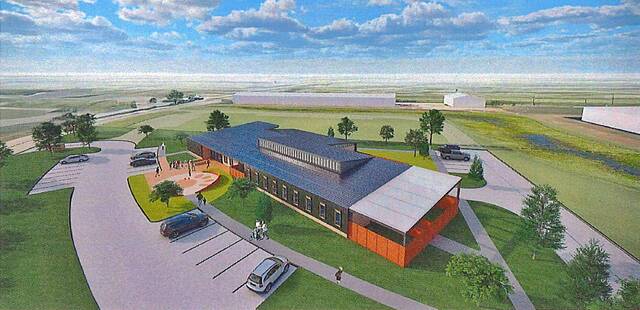
The land for the new facility is southeast of Daktronics where Prince Drive curves and is directly west of Counterpart. It would be a 9,600-square-foot building, much larger than the current 4,425-square-foot facility at 120 W. Second St. S. — effectively doubling the shelter’s current footprint.
“It was built as a veterinary clinic and we have enjoyed our time there, but we outgrew that space as soon as we moved in,” Moore said.
The BRHS has been in its current facility for more than a decade, spending 13% of its budget — $48,000 — per year just to cover rent. While it considered expanding there first, ownership and land complexities made it too difficult to move ahead.
Plus, Knudtson added, “It does not have the plumbing systems or ventilation systems that are really required for an animal shelter.”
No down time
Limitations aside, the facility is constantly busy because it’s the only animal adoption agency in the county and because of the ever-growing population in and around Brookings. In further making its case for a lead gift of at least $500,000 from the county, the group ticked off a list of what BRHS does:
• Almost 750 animals — 745, to be specific — were taken in last year, up 29% from 2024.
• Most of the intakes, 95%, were from Brookings County.
• More than 200 volunteers gave 2,422 hours of in-shelter work last year.
• All animals receive the rabies vaccination as well as other necessary vaccinations prior to adoption.
• All animals are spayed or neutered before adoption, with 422 surgeries performed in-house last year.
• Works closely with law enforcement to respond to hoarding situations, animal cruelty and animal neglect cases.
• Supports owners to help them keep their pets, including microchipping the animals prior to adoption and providing a pet food pantry.
“There is a need for someone to care for these (animals),” Daly said, noting that the closest other shelters are in Sioux Falls and Watertown. “We coordinate with them. There’s a lot of sharing and caring between the shelters when we can make it work.”
She added, “It’s important to care for all the lives in Brookings County. Human lives first, but animals definitely play a part in human lives, and I think all of you know that.”
Improvements, fundraising
The proposed facility would include numerous improvements over what BRHS currently has. These include:
• An up-to-date Americans with Disabilities Act-compliant layout, along with 22 dog kennels — right now, it has nine — and expanded and more functional housing for cats.
• Improved HVAC, plumbing and dedicated isolation rooms to prevent the spread of diseases.
• Built to last using durable materials that are easy to clean, sterilize and maintain.
• Plenty of outdoor space for animals to exercise.
• An efficient floor plan that will allow for increased capacity, improved workflow and additional security.
Realizing this vision requires both a concrete timeline and significant financial generosity — challenges the BRHS is already tackling head-on:
• Fall 2023: Hired HDR of Omaha, Nebraska, and Animal Arts Architects of Boulder, Colorado, to conduct a facility needs study.
• Spring 2024: Received a concept design for a larger facility meeting industry standards.
• May 2025: Opened an endowment fund with the South Dakota Community Foundation.
• Summer 2025: Hired BWF Capital Campaign Consultants.
• January: City of Brookings gifted 2.5 acres of land valued at $285,000. In addition to that, the city has since pledged further capital campaign support via gifting the net proceeds from the sale of three acres of city-owned land directly north of the proposed facility, with an estimated value of $300,000.
• Private donors are being pursued, with a number of six-figure pledges received over five years.
• Grant research and applications are underway.
• Commitment to growing its endowment fund with SDCF.
Questions raised
Following their presentation, commissioners peppered the BRHS representatives with questions and observations.
• Commissioner Dave Miller inquired about this year’s BRHS budget and was told it’s $380,000. He then asked about the 745 animals taken in last year, and what percentage of them were adopted.
Moore said 92% to 95% are adopted or transferred out, typically to other shelters in the area. “We work with other shelters in the area because we have different strengths.”
• Commissioner Shawn Hostler inquired about the proposed building; specifically, how it would rank in size, features, amenities and square footage to facilities in Sioux Falls and Watertown.
Moore said she’d have to research that question but noted that Watertown is also studying the process of constructing a new facility and has initiated the land-buying process.
Hostler also wanted to know more about where BRHS ranks for intakes and housing of animals compared to Sioux Falls and Watertown.
“Sioux Falls has a significantly higher population and significantly more intakes than we do,” Moore said, noting that they’re in the 3,000 range for adoptions whereas Brookings is under 1,000.
She added that Watertown and Yankton are similar to Brookings in intake size and adoption numbers.
Knudtson chimed in as well, noting that “Overcrowding of shelters is a nationwide problem right now. It’s really been ever since COVID, I think, there’s been a problem.”
• Veterinary services drew Commissioner Larry Jensen’s attention, particularly whether they’re available in-house at the BRHS or if veterinarians come in to do the work.
Moore explained that veterinarians volunteer their time and come from Big Sioux Veterinary Care and the SDSU Animal Research Lab, in addition to a retired veterinarian.
“They volunteer all of our medical diagnostics and spay/neuter surgeries or other surgeries as needed,” Moore said. “We’re very lucky in that regard. Going forward, having a veterinarian on staff is something that we keep in mind.”
Daly added that while veterinarians give their time freely, BRHS still must pay for equipment, medicine, etc.
• Commissioner Kelly VanderWal complimented the proposed facility’s appearance, then asked if the society had gone to other communities to tour facilities, to see what it liked or didn’t like.
“Have you found some value in that?” VanderWal inquired.
The group told him that BRHS toured facilities in Sioux Falls, Yankton and Omaha, with the latter having been designed by the same architects now employed by BRHS, and spent an entire day at the Omaha facility. The excursions provided answers about what aspects BRHS liked and didn’t like, along with insights from the staffers at those facilities about what they would do differently.
“We know we only get one shot at this,” Moore said. “We want to make sure we are being good stewards. We want to make sure that we are being financially responsible, but we also know that if we cut corners in the wrong places, that we’re just going to be in a situation in five years where we may be asking our donors to help us repair things.”
• Miller had one last inquiry that focused on what happens if fundraising — “$7 million over the next five years is a pretty aggressive goal” — doesn’t meet its goal.
“If you get halfway there, what’s the plan? Do you push it out longer? Do you change the building design?”
Knudtson said that, in such a scenario, BRHS would consider changing the building design or perhaps take a loan out for part of the project.
“I think when you’re doing something like this, you’ve got to look at what the ideal would be,” she said. “What would we like? What would serve our community now and in the future? And so that’s what we’ve got. We’ll have to see where this goes. If it takes off and we’re able to get there in five years, then that’s what we’ll do; we’ll build this. Otherwise, we’ll have to regroup and come up with a Plan B.”
In closing, commissioners took no immediate action on the $500,000 minimum request from BRHS, nor on a separate request from the group for a boost in non-mandated funding from $10,000 to $20,000 starting in 2027.
The topic, however, will likely come up during the commission’s budget discussions in June.
— Contact Mondell Keck at [email protected].
Leave a Reply