
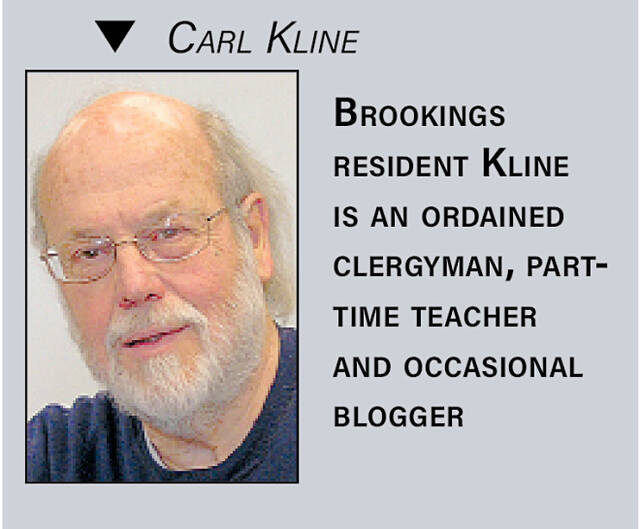
I would guess the title of my monthly magazine is a misnomer, but nevertheless, the publisher has chosen the name of “The Christian Century.” It’s been around for a while (since 1884 under a different name, with the present name arriving in 1900). So I’m not exactly sure if that first century, beginning in 1900, was the “Christian” century, or if this one is, or perhaps it is still to come?
After all, who decides, and how? Does a Christian century mean no Jews, or Muslims, or Buddhists; or that Christianity will be the pre-eminent religious tradition on the globe? Then again, maybe it doesn’t mean to express exclusivity, but rather simply suggests a focus on the status and developments in Christianity, in our time, in our century.
This is the way I have chosen to read it. It also claims to be “thoughtful, independent, progressive.” And this describes the way I’ve come to know it.
There were a few “aha” moments in the May issue. One came from the writing of a priest serving a church in San Diego. It’s primarily an immigrant church, one he’s been serving for nine years. He knows the struggles of being new to this country, especially under this administration, as ICE ramps up its efforts at deportation. He counsels with an asylum seeker, in tears, because of an ankle monitor recently imposed (though he had never missed a check-in or appointment). They reflect together on biblical material relevant to his situation. They focus on the Psalms and then 1 Peter. “Do not fear what they fear, and do not be intimidated … and when you are maligned, those who abuse you for your good conduct in Christ may be put to shame.”
To think that in 2025, there were 605,000 deportations and 1.9 million self deportations. Not to mention the thousands in concentration camps. One wonders how many of those folks found some solace in their faith or their clergy?
There is an article on church and worship services, post COVID. Attendance has dropped. And those who are present are among the more educated and wealthy. What happened to the poor and working class members? The title of the article is “Has worship become a luxury good?” The writer concludes, “As the U.S. economy cedes to technocracy, the urgency of integrating a theology of labor and human dignity into our churches is more pressing than ever.” We like to think the Christian church is an institution open and available to all; but is it these days?
For the philosophically inclined, there is an article attempting to answer the questions, “Does God exist? Do I?” It’s written by a trans man who is arguing for the existence of both. Even though he shares Thomas Aquinas and his five proofs of the existence of God, in the end, neither being trans or the existence of God is to be proven. “Both faith and identity are lives to inhabit, not arguments to win. There is nothing to prove.”
For the theologically inclined, there’s an article about the ascension. This is written by a priest who trusted and believed in the biblical report of the virgin birth, of the miracles performed by Jesus, and by his death on a cross and resurrection from the dead. Those events were believable. But only John Donne and his sonnet “Ascension” helped her move to a believable understanding of that biblical event. Donne uses a different word, an “uprising.” It seems words, in the world of faith, matter.
Then there is a section of each Christian Century on the news of the day. We discover there are members of the military objecting to the “Armageddon” framing of the Iran war by military leadership. We discover a recently released protestor, having spent a year in immigration custody for protesting the bombing of Gaza by Israel, which has killed nearly 200 of her family members. And we read about a member of the clergy suspended, because she once worked for Jeffrey Epstein. Obituaries are always present in this section, of the known and unknown, in the world of Christianity.
I’m afraid faith is not a permanent, solid, unwavering condition. It can be sorely shaken by personal and worldly events. Faith is rather, the “assurance of things hoped for, the conviction of things not seen.” Sometimes our faith can be renewed or improved by publications like The Christian Century.
My faith is uplifted by a peace maker, imprisoned and finally released for protesting genocide. My faith is strengthened by someone examining and finding new meaning in the biblical record of Christ’s ascension. My faith is strengthened by one socially ostracized for their sexual orientation finding strength in their faith. My faith is strengthened by the efforts of the Christian church to reach out to the economically exploited, the forgotten, and the immigrant.
Each month, The Christian Century helps me get back on track in this time of turmoil. It helps replace despair with hope, sorrow with joy, fear with faith. As we read in the Gospel of Matthew: “Truly I tell you, if you have faith as small as a mustard seed, you can say to this mountain, ‘Move from here to there,’ and it will move. Nothing will be impossible for you.” Even a modest life of faith matters.
Leave a Reply