
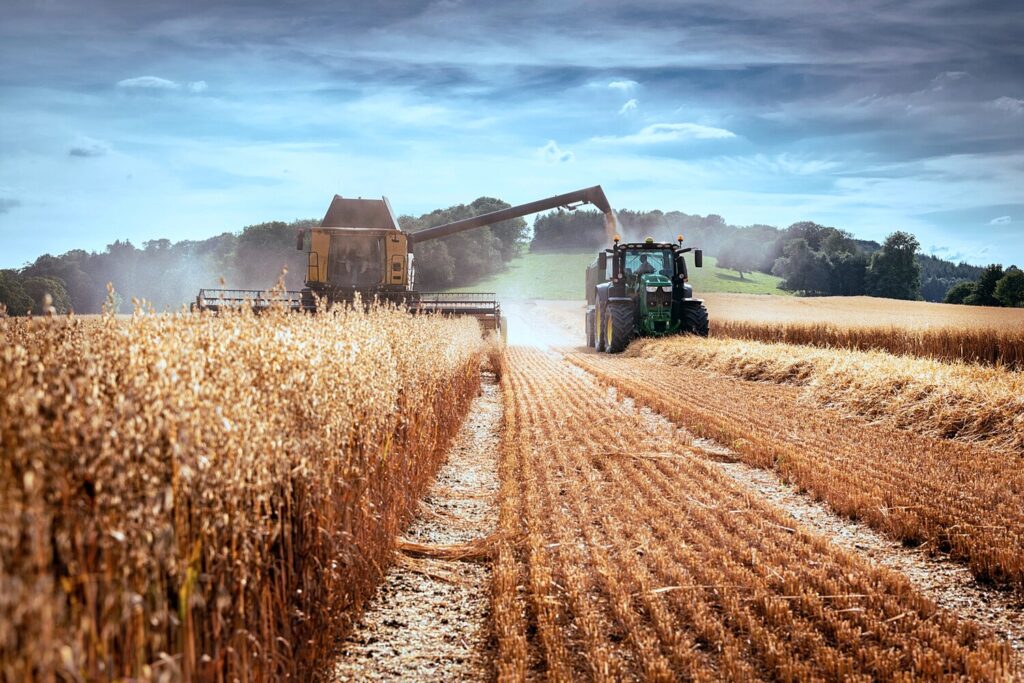
BROOKINGS COUNTY With harvest in full swing in Brookings County and surrounding areas, several things are likely on the minds of ag producers, their families and neighbors staying safe, prices, and the bone-dry conditions brought on by a late-season drought.
The harvest window is always a tight one with a lot of factors to consider, and the need to get it done can sometimes lead people into trying to hurry things up. Thats a mistake.
Farmers perceive that it needs to be done rapidly, South Dakota State University Extension Field Specialist John Keimig told the Brookings Register. Well, when they start doing that, everything becomes quicker and you start overlooking small details, such as safety. So, one of the things that I always talk about is, slow down. Sometimes you go faster by going slower. You start skipping safety steps when you get in a hurry.
He would know, too: One of his friends was injured in farming-related accident.
I think of I had a friend this last spring that had an accident. He was going to get out of his tractor. He absolutely remembers reaching down and putting the parking brake on, Keimig said. Well, he got out and the tractor met him about halfway back. Apparently the brake either didnt engage or he didnt get it completely engaged or it was a mechanical piece of equipment that failed. Either way, he ended up getting his ankle ran over.
He said, Man, Ive done it a thousand times. He said, I know I reached down there and did it, but he said, I was in a hurry, Keimig continued. Again, things happen when we get in a hurry and its not because we dont know better, its just because we, during harvest, during planting, guys are tending to work a longer work day.
So, all of sudden, we start having less sleep. Were a little tired. Were operating on caffeine. All of those things about life are all of sudden different than what you do every day and because of those things, we tend to sometimes make poor decisions.
He finished, It sounds so simple, but its basically just slow down. Slow down and think through what youre doing.
Wheres the moisture?
Then theres the drought something that the few spatters of moisture the Brookings area received Friday into Saturday did nothing to alleviate.
As of Oct. 15, the U.S. Drought Monitor had Brookings, Deuel and Hamlin counties completely within moderate drought conditions, with the eastern portion of Kingsbury County and most of Lake County similarly categorized. To the south, though, in Moody and Minnehaha counties, it gets worse, with severe drought conditions prevalent.
Definitely drought is a concern. The last few months have been very dry and heading into fall thats always kind of a concern, SDSU Extension Field Specialist Anthony Bly said. We like to see a little replenishment of that.
What will next year be like? Certainly, as we learned from the turnaround in April and May of this year, it can change pretty quickly, he continued. Right now with the dryness, fires are a concern. Its everything is just dried out. Low humidity and so forth, and those type of things are always concerning.
Bly added, Wed like to see that moisture built up back in the soil. Fall rains are always good. Wind erosion has been a problem the last many years tillage done in the fall this year could lead to more wind erosion problems because it is so dry. We tend to recommend that producers just leave the soil alone as much as possible under these conditions.
Reminders for farmers
Farming is a risky profession, made even more so during the harvest rush. With that in mind, Keimig offered a laundry list of ideas to help ag producers stay safe while on the road:
- Make sure all of the lights are working on the machinery.
- Make sure the proper placards are in place and theyre clean, visible and properly bonded.
- Try to avoid areas with heavy traffic during peak times.
- Before moving equipment, make sure it and its associated personnel can be seen.
- If equipment must be parked on the road, ensure its properly marked down the road to warn oncoming traffic.
- Mark the edges of equipment with reflective tape or reflectors.
- When moving multiple pieces of equipment, leave space between them to allow vehicles safe passing areas.
- If working in wet conditions, clean the equipments tires before entering highways to reduce getting clumps of mud and other hazards on the roadway that can be a threat to lower-profile vehicles.
- Move equipment in the daylight as much as possible.
- Transport a combine and its header separately to reduce the risks that come with being over width, such as having to navigate around linear posts and any oncoming traffic.
Reminders for motorists
Its not just ag producers that Keimig has on his mind, either. Hes also thinking about everyone else sharing the roads with area farmers and their heavy equipment.
Be patient when youre traveling behind slow-moving vehicles. Relax. Enjoy the beautiful fall views, he said.
He added that, when meeting farm equipment, motorists should pull to the right-hand side of the road to ensure safe passage while looking ahead to oncoming traffic with one caveat, though: Note the conditions of the roads shoulder; if its soft, dont get too far over.
You as a driver need to remain safe also, but pull to the side, Keimig noted. He pointed out some other tips as well:
- When passing machinery or trucks parked alongside the road, slow down and give room in case someone is getting into or out of that equipment. Give them an extra couple of feet. Get over as far as you can when you go around them.
- When passing machinery in the same lane, do not pass close to an intersection or a field entrance, as they may need to swing wide into the opposite lane in order to navigate the corner.
- Do not assume machinery will always turn right. Theyve got flashers on, they have blinkers, but sometimes if we followed anybody in some of our bigger towns, I doubt everybody remembers using their blinkers, Keimig said. If youre coming up to an approach, just relax.
- Practice safe, responsible driving, and dont assume a machine operator can see you.
- Do not tailgate farm vehicles. If youre right behind them, consider their size and width they may not see you. So, stay back a ways. Its also helpful in case they have to make a sudden stop.
Field, storage safety
Naturally, safety concerns extend off the road as well, and Keimig said that includes being aware of overhead electrical lines.
I had a colleague many years ago actually ended up getting killed because an auger he was moving hit an electrical line, he related. There are always those type of things that guys need to watch out for and consider. Or as equipment is getting bigger and taller even out in the field with the big lines make sure that you dont get up into the line with your unloading auger or any augers in the bins or what have you or even other equipment that you may be folding or unfolding. So, keep your head up, make sure you dont hit an electrical line.
Keimig also said producers should be careful when putting their harvest into bins for storage.
Make sure the grain youre putting into the bin is in good condition and stays that way, so next fall or next spring when youre taking that grain out of the bin, taking it into town or wherever youre delivering it to, its remained in good condition so you can avoid any grain bin-type of safety issues.
He also suggested producers keep fire extinguishers on all of their equipment. Furthermore, when parking a combine at night, try to put it somewhere where theres no field stubble, such as an area that has been disked. That way, if any part of the combine is hot and creates a spark, it doesnt have the fuel to create a fire.
Tough times
The harvest bounty and drought conditions arent the only things commanding farmers attention. Commodity prices are also on their radar, and for good reason.
The producers are in the game all the time theyre living it on a daily basis, Bly noted. I would assume a lot of your readers are urban readers and arent directly on the farm doing the work every day. I want them to understand that commodity prices have been greatly reduced from the past few years. Even with some decent yields, the return on acres is definitely not going to be as great. The input costs dont seem to be going down in correlation to the commodity prices that farmers receive. You know, things just dont look that great or promising on the farm right now.
What are some of the factors causing those low prices?
Well, theres a lot of things. I would bet if you interviewed a commodity broker, they would tell you that its extremely complicated, Bly said. Rain predicted in Brazil and Argentina has an impact on prices globally. Supply and demand. Overproduction from the past few years has kept our ending stock inventory of corn and soybeans higher than usual, and thats weighing down prices, too.
In closing he said, I just think that your readers that dont necessarily do farming on a daily basis just should kind of know that. It could affect a lot of things. Of course, that can change in a moments notice, too, with world dynamics. Its kind of a tough year on the farm.
Contact Mondell Keck at [email protected].
Leave a Reply