
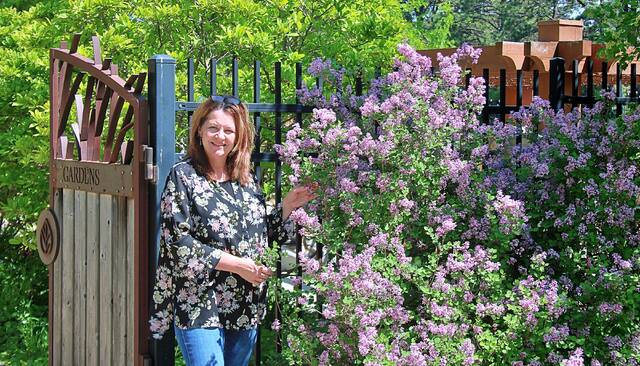
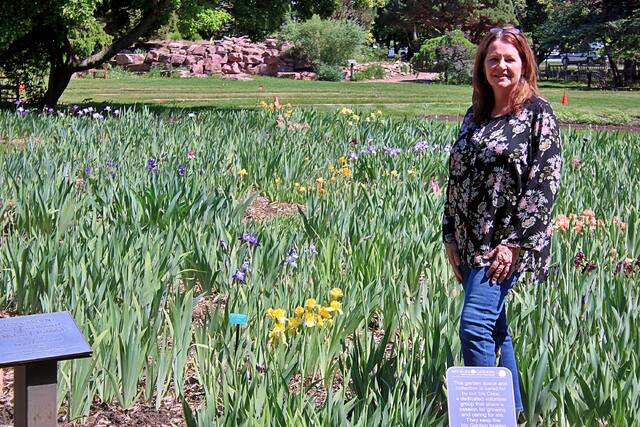
BROOKINGS — From walking among head-high perennial grasses to watching monarch butterflies fuel up for migration, McCrory Gardens is inviting area residents to slow down and experience nature free of charge.
The botanical garden at 631 22nd Ave. has kicked off Community Days, a series of monthly, unstructured open houses designed to entice new visitors, picnic-goers and families to explore every corner of the 25-acre landscape. The first event was May 27, with others planned for:
• June 24
• July 22
• Aug. 26
• Sept. 23
• Oct. 28
“You really have to stop and experience it,” McCrory Gardens Director Lisa Marotz, who’s in her 10th year, told The Brookings Register in a recent interview. “We really want people to be able to come and experience the gardens as they would any other day. We just want it to be, really, free to experience, free to explore, free to come and go as they want.”
The genesis for the idea surfaced after she attended an American Public Gardens Association meeting in Houston, Texas, in March.
“A lot of … botanical gardens were talking about how they do a community day, or they offer a day where everyone can come to the garden,” Marotz said.
She added that idea is to attract people who either don’t think about coming to the gardens or who are deterred by the normal admission price. That price ranges from $4 to $6, with free exceptions for South Dakota State University students, employees and children 5 and younger.
“I’ve always looked for ways to invite all and offer opportunities for everyone to come to the gardens,” Marotz said. “Admission is important to us because that’s how we pay our bills. We’re partially funded by SDSU, but we have to make up the rest.”
Another goal of the Community Days event is to gain interest from local businesses to help support it.
“If we could find some corporate donor or business donor with maybe a $1,000 gift — one for each of the upcoming Community Days — we could close that gap, too, a little bit of ‘Yes, we want to have a free day, but there’s expenses that come with it.’ There’s always a fine line in that,” Marotz said.
In the end, though, the inspiration came from the Houston conference and hearing what other botanical gardens do.
“Just really opening it up because this is such a beautiful place,” Marotz said of McCrory Gardens. “We want everyone to be able to see it and enjoy it.”
Expectations, membership benefits
Dozens of guests visit the gardens on a daily basis, and Marotz has high hopes for even greater attendance during Community Days events.
“I’d like to think that we could get (up to 200) people to come to the gardens,” she said. “We’re here from 10 a.m. to 7 p.m.
“I’d love to see that we’ve got people who haven’t been here in a while; that always wanted to come, but never stopped to do it,” Marotz continued. “I’m hopeful that, because we are open after your standard work hours, that’ll entice maybe a family to pick up dinner and come sit in the gardens and have a little picnic, maybe.”
She finished, “We just have a lot of dreams for people utilizing the gardens and experiencing the gardens. … Listen to the cardinal, just things you might not catch if you didn’t slow down and take a chance.”
The more people that take part in such events could also increase the garden’s membership ranks, which Marotz said costs $35 for one person for one year.
“We pay into a reciprocal program, so that (also) gets a person access to over 400 botanical gardens across the United States, whether free admission or reduced admission, because they’re a member here,” she explained. “Those dollars definitely go to help support our mission here at the gardens of connecting people and plants.”
Another membership benefit is a free ticket to the Garden Glow event. It’s an immensely popular attraction during the Christmas season. How popular? Quite so, with Marotz saying more than 14,000 people attended the most recent Garden Glow.
Change and growth
With five more dates coming up in the months ahead, Community Days guests will see changes each time they visit — after all, a garden is ever-evolving, especially during spring, summer and fall.
“When I look at how our horticulture team works with the landscaping here, I think about the perennial garden … it will grow to where plants and grasses are way above your head,” Marotz said. “In April, as we leave it up through the winter — it gives protection to the creatures that are still here in the wintertime — we mow it down to the ground. Today, you can see there’s 12 inches of growth, maybe. It just continues to change and grow.”
The dynamic landscape changes not just in size, but in color and structure.
“I often have said that we should have a perennial cam, like some zoos have their panda cams, to show how things grow and change,” Marotz said. “I love seeing the changing of all the brightly colored leaves in the fall, of course, but then when the leaves fall, we see the structure of the trees—things you might not have seen when the foliage is there.”
Late-summer visitors might also catch a glimpse of a massive wildlife migration. She noted that McCrory Gardens sits on the annual monarch butterfly migration path, with the insects attracted to plants like Joe Pye weed and Button Liatris in late August and September.
“They are just inundated with monarchs getting nourishment for their journey,” Marotz said.
Useful lessons
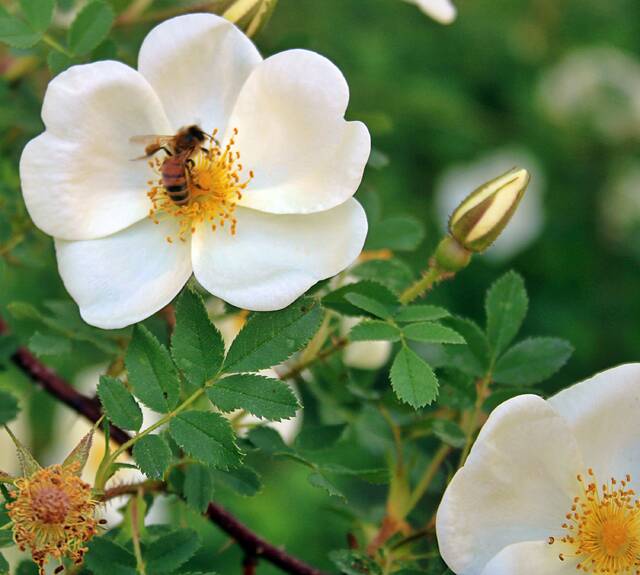
Besides its natural beauty, McCrory Gardens also fulfills practical purposes, including showcasing what grows well in this area, and how residents can utilize it in their landscapes to, among other things, provide for pollinators such as bees.
It’s an enormous task, too: Marotz noted that her team grows 35,000 plants from seed in greenhouse space on the SDSU campus.
“I’m not sure how many trailer loads and pickup loads it took to get all of those plants here to get climatized to being outside now,” she said. “The plants are so tiny right now and then, in a month, they’ll be more filled out and again and again.”
McCrory Gardens is also taking part in celebrating the 250th anniversary of the United States, Marotz said, with a lot of red, white and blue plants — “or blurple, as our director of horticulture calls it, because it’s really hard to find a blue plant.”
‘Go into every corner’
While there was some discussion about having programming and tours during Community Days events, it was decided that a mostly unstructured experience was the best approach, Marotz said.
When they arrive, guests will receive a garden map and mentions of locations they should visit. Other options include:
• Taking part in a scavenger hunt.
• Borrowing wearable butterfly wings for visitors who want to get into character.
• Backpacks are available as well and contain a magnifying glass and a journal for youngsters and adults alike to write or draw in.
“It’s really just — go into every corner. That’s what I tell people, too,” Marotz said. “There are certainly paved paths and sidewalks here, but we encourage off-roading as well. So, feel free to walk on the grass.”
She also hopes people help spread the word about Community Days.
“Tell someone else. Don’t just be the keeper of the knowledge — be the sharer of the knowledge,” Marotz said. “It’s really an effort to open the gardens.”
— Contact Mondell Keck at [email protected].
Leave a Reply